Everyone who talks about early Tokyo techno starts at the same place — Space Lab Yellow, Nishi-Azabu, 1991, the club that supposedly invented the scene from nothing. It didn’t. It’s just the version that survived, because Yellow got the documentation and the mythology, and the room that actually did the connecting work next to it in the timeline got neither.
That room is Maniac Love, which opened in November 1993 and doesn’t come up much unless you’re already deep enough to be asking the wrong questions on purpose. A DJ going by Yama — Manabu Yamazaki, if you want the name that never gets said out loud — became its artistic director and ran two weekly nights there from the start: Sublime on Saturdays, techno, and White Room on Mondays, ambient. Not the big weekend everyone flew in for. The Monday, for whoever was still curious enough to show up on a night nobody was covering.
That’s where the actual connecting happened. Ken Ishii’s early work came out through Sublime Records, which Yamazaki built directly out of those two residencies. Susumu Yokota found his way in through a mutual introduction and started playing there regularly, and it’s Yamazaki who Yokota later credited with steering him toward the European label relationships that eventually got his music out of Japan entirely. None of that happened at a big show or through a label cold-calling anyone. It happened because a handful of people kept showing up to the same small room on a slow night.
I was in diapers for most of this. I’ll say that upfront because it matters — I didn’t live it, I chased it down later from people who did, the way you chase down a rumor about a record that only exists because three people who were in the same room in 1993 still mostly agree on one detail from that night. What I’ve got instead of a memory is the paper trail, and the paper trail says the interesting part of this story isn’t the club that got famous. It’s the two weeknight residencies inside it that didn’t, and what came out of the room once those nights ended.
Ishii’s Reference to Difference is the record that makes this worth caring about instead of just knowing. 1994, Sublime, and it doesn’t sound like a scene trying to prove it belonged next to Detroit or Belgium. It sounds like a room full of people who’d already stopped worrying about that question — ambient textures doing most of the work, techno structure underneath it more implied than stated. It got real attention from the people paying attention at the time, and then mostly disappeared from the conversation the second Ishii’s more accessible work started getting picked up by people who’d never heard of Maniac Love in the first place.
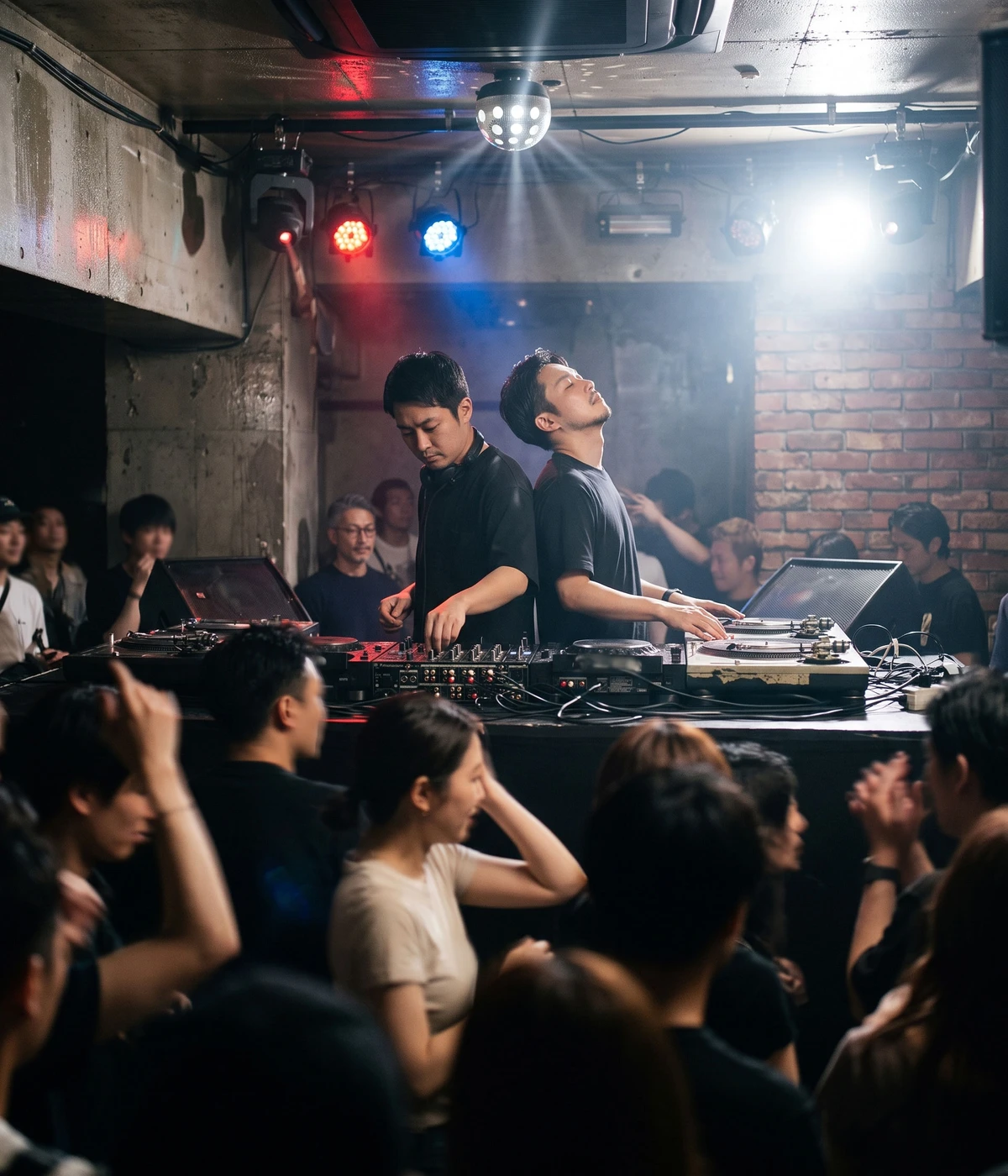
Here’s the part that actually gets me: none of this needed the room to be legendary. It needed the room to be small enough and slow enough that the same six or seven people kept ending up in it, on a night with no reason to show up other than actually wanting to be there. Yellow was the destination. Yama’s Monday night was the filter — it’s where you ended up if the big room wasn’t the point for you. Every scene has one of these. Most of them stay unnamed because nobody thinks to write down the side door.
I don’t know exactly what that room sounded like on a random Monday in 1994. Nobody archived it in any real detail, and the few accounts I’ve read don’t fully agree on the texture of it — closer to dub, one source implies; closer to a held note that went on for twenty minutes and nobody complained, according to another. I’ve decided that disagreement is the most honest thing anyone’s told me about it. A room that important shouldn’t have a clean record. If everyone remembered it the same way, it probably wasn’t that good.